Visa’s VAMP Program: What Merchants Need to Know
Understand Visa’s Monitoring Program (VAMP) — what it is, what changed, and how it can impact chargebacks, fraud metrics, and your merchant account.
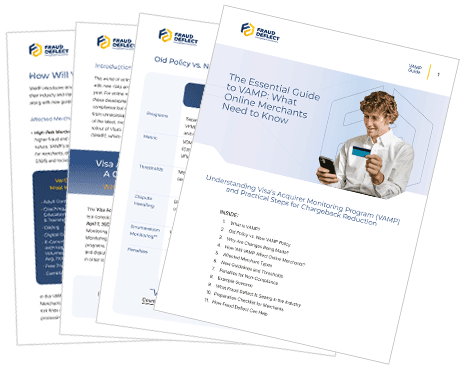
Free educational guide for U.S. merchants. No sales pitch.
What Is Visa’s VAMP Program?
VAMP stands for Visa Acquirer Monitoring Program.

Why VAMP Matters
VAMP focuses on patterns, not isolated events. As a result:
Repeated disputes accumulate risk faster
Fraud alerts carry more operational weight
Waiting for chargebacks is often too late
In prolonged or severe cases, continued VAMP violations may lead to:
Monitoring programs
Fees passed down by acquirers
Operational restrictions
Potential merchant account (MID) termination, at the acquirer’s discretion
Understanding VAMP early gives merchants more control over outcomes.
Before vs. After VAMP
Before VAMP
Chargebacks and fraud monitored separately
Won disputes had limited impact on risk
Monitoring triggered mainly by high chargeback ratios
Risk appeared later in the lifecycle
After VAMP
Chargebacks and TC40 fraud alerts counted together
Fraud signals carry more weight, even when disputes are won
Monitoring can apply even with lower chargeback rates
Risk is identified earlier through combined signals
The margin for error is smaller
Free educational guide for U.S. merchants. No sales pitch.
The Most Common Mistake Merchants Make
Many merchants focus on reacting after a chargeback or fraud alert occurs.

What You’ll Learn in the VAMP Guide
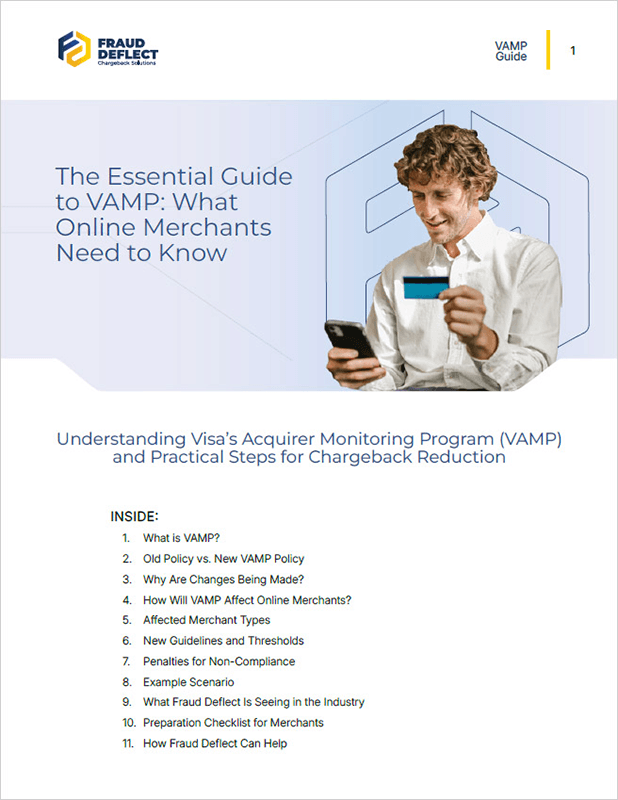
Clear explanations. No marketing fluff.
Who This Guide Is Designed For
Free educational guide for U.S. merchants. No sales pitch.
Educational resource. No obligation. Built to help merchants make informed decisions.